Convergence and the Near Reflex: The Four Types of Vergence
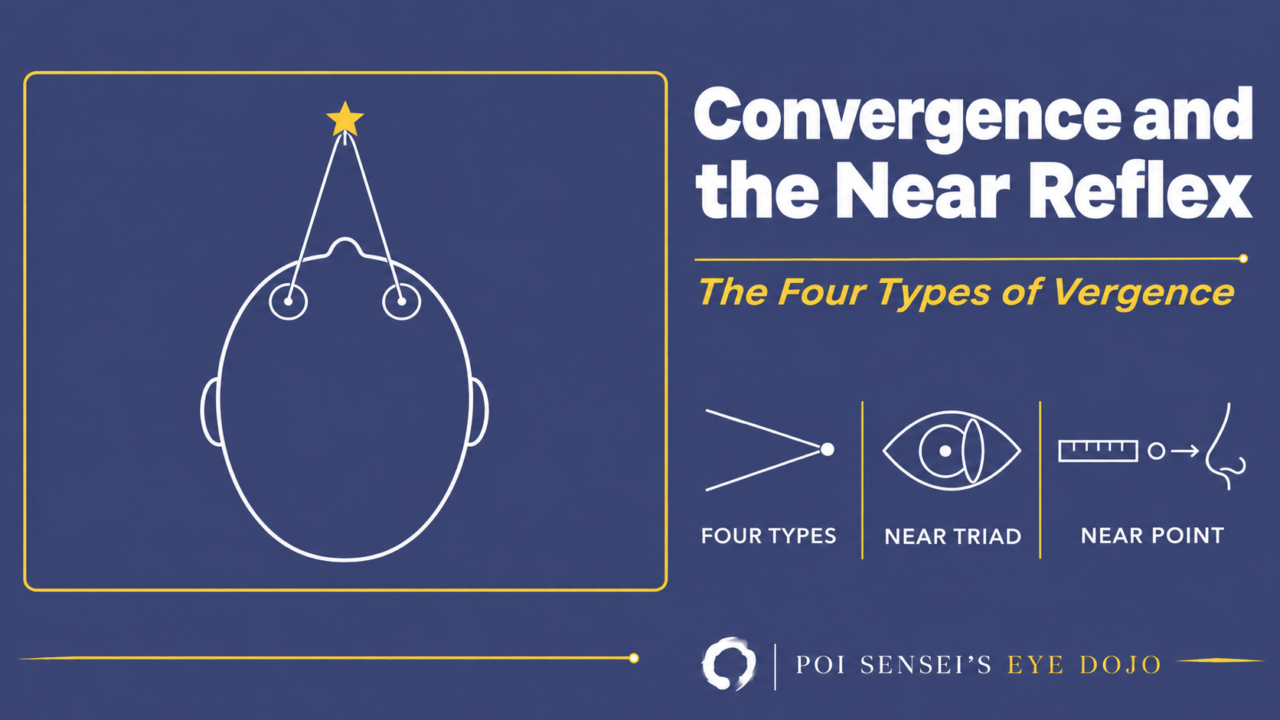
When you look at something close, both eyes turn in. This is convergence, and it has four types: tonic, accommodative, proximal and fusional convergence.
The figures below show a head from above, with the line of sight of each eye in blue. The figures separate the four types and add them one at a time, so the lines move closer together.
In real viewing, the type of convergence does not depend on how far away the target is. All four work together on one target. The star moves closer in the figures only to make each step easy to see.
Anatomical position of rest
With no convergence at all, as in a coma or after death, both eyes turn slightly outward. This is the anatomical position of rest.
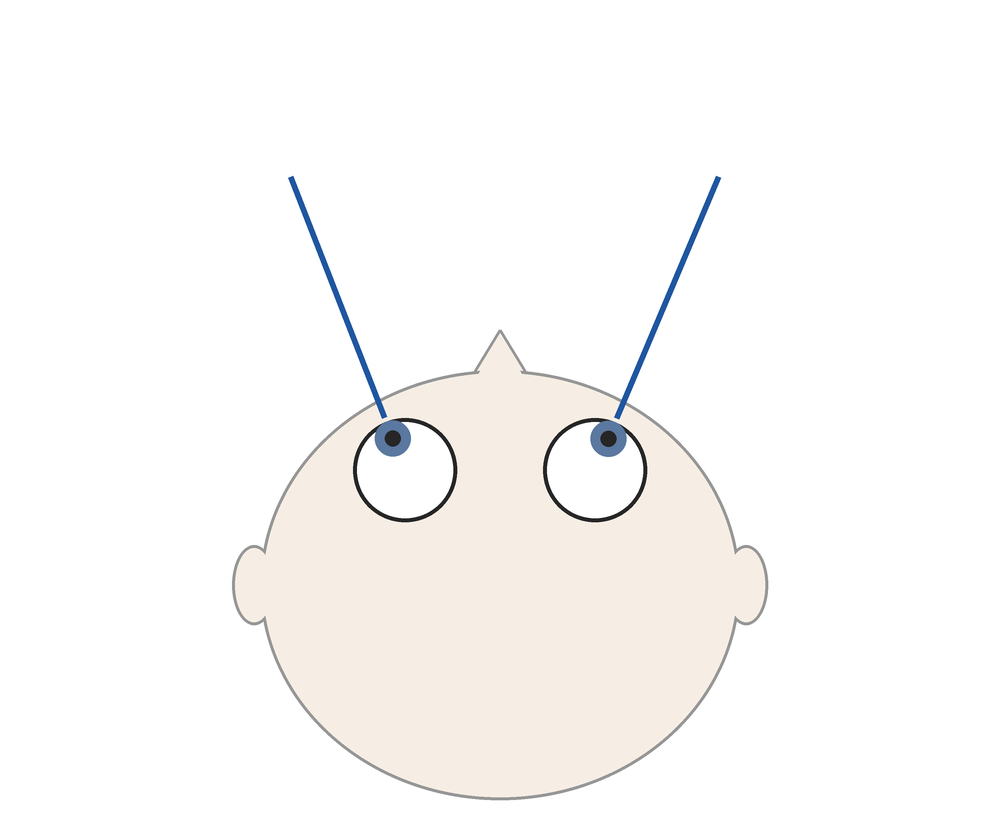
Both lines of sight point outward. The figure exaggerates the angle so the change is easy to see.
Tonic convergence
Tonic convergence is the steady tone of the medial rectus muscles. It is always present while you are awake, and it brings the eyes from the position of rest to straight ahead.
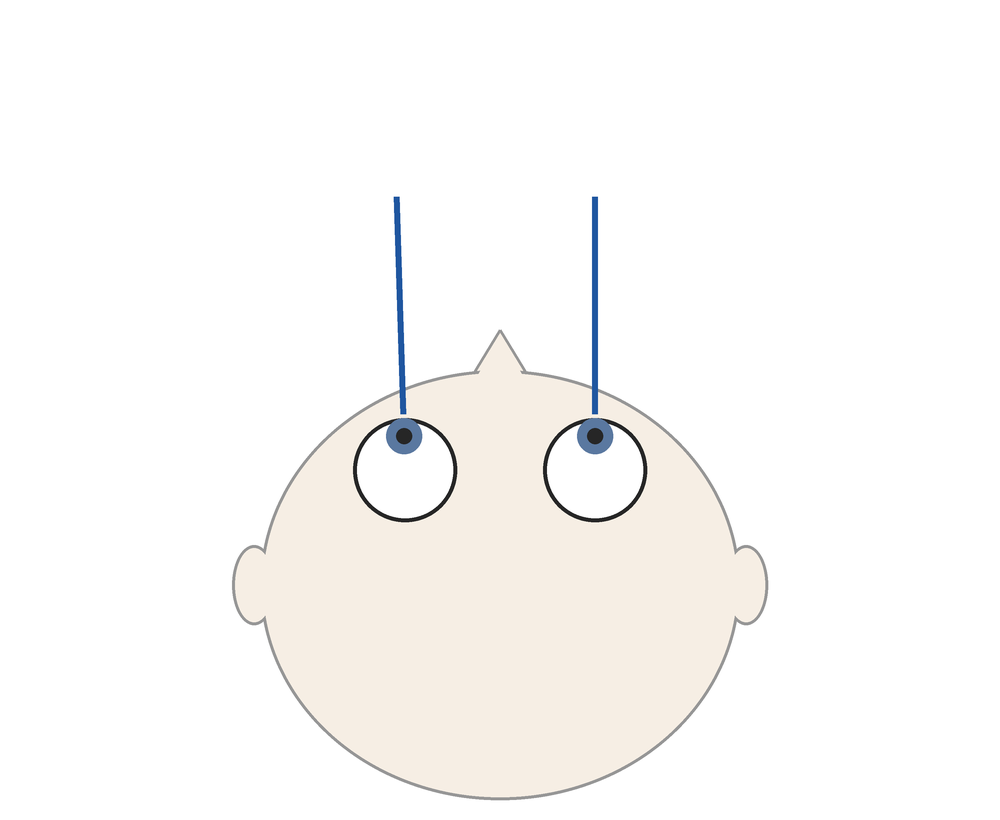
The two lines of sight are now parallel.
Tonic convergence is lost under deep anesthesia and after death, so the eyes drift back out to the position of rest.
Accommodative convergence
Accommodative convergence comes with accommodation. When you focus on a near object, the eyes also turn in.
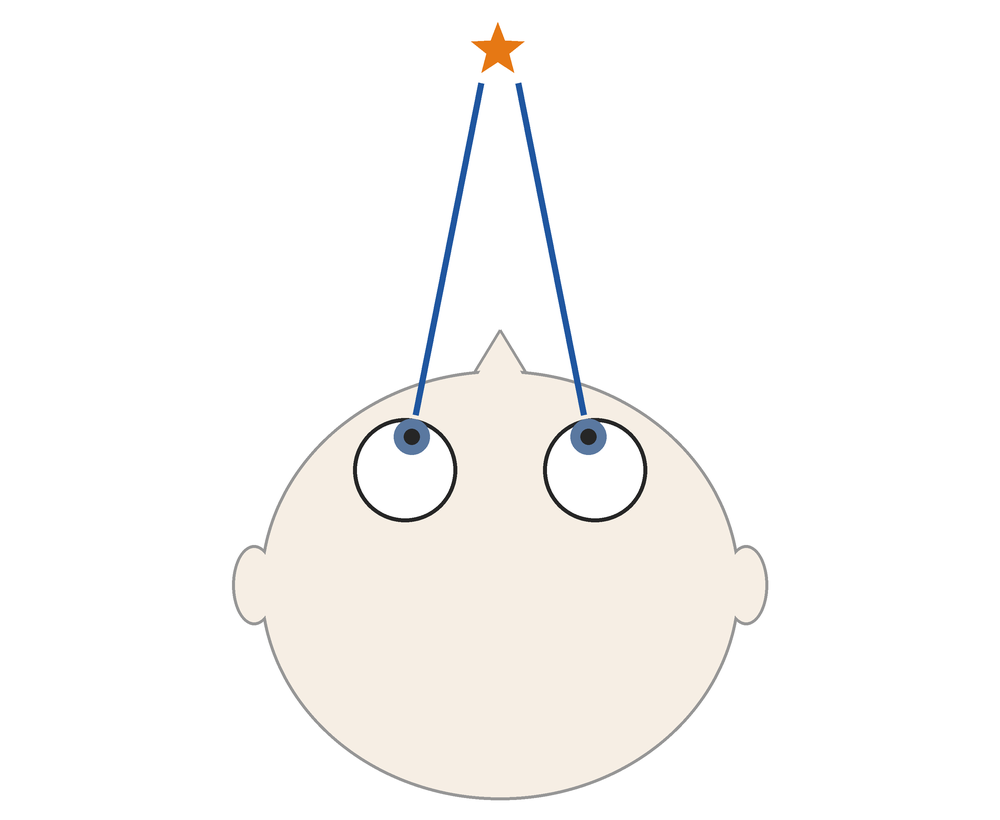
With accommodative convergence added, the lines of sight turn in toward the target, the orange star.
The AC/A ratio tells you how much the eyes converge for a given amount of accommodation. It is measured in prism diopters of convergence per diopter of accommodation, and the normal value is 3–5. In non-refractive accommodative esotropia, the AC/A ratio is high.
Proximal convergence
Proximal convergence is driven by the sense that something is near, apart from focusing.
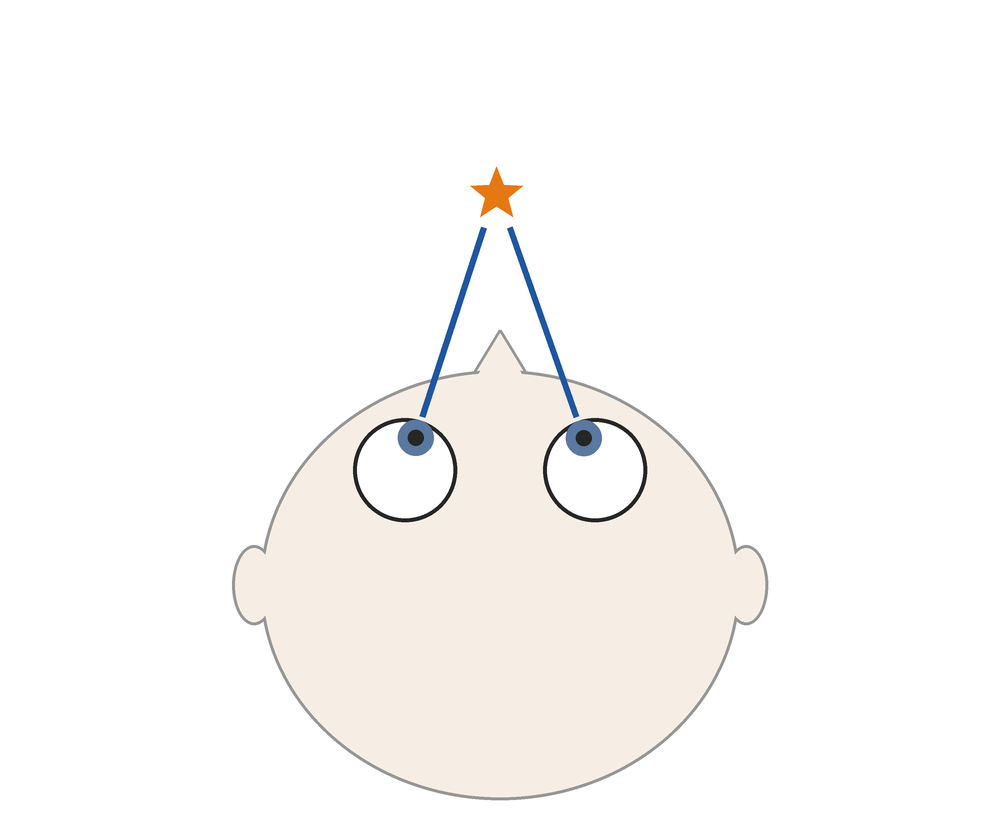
With proximal convergence added, the lines of sight turn in further.
Fusional convergence
Fusional convergence brings the image of the target onto both foveas, so the two eyes see one single image. It is a reflex driven by the small difference in where the image falls in each eye (disparity).
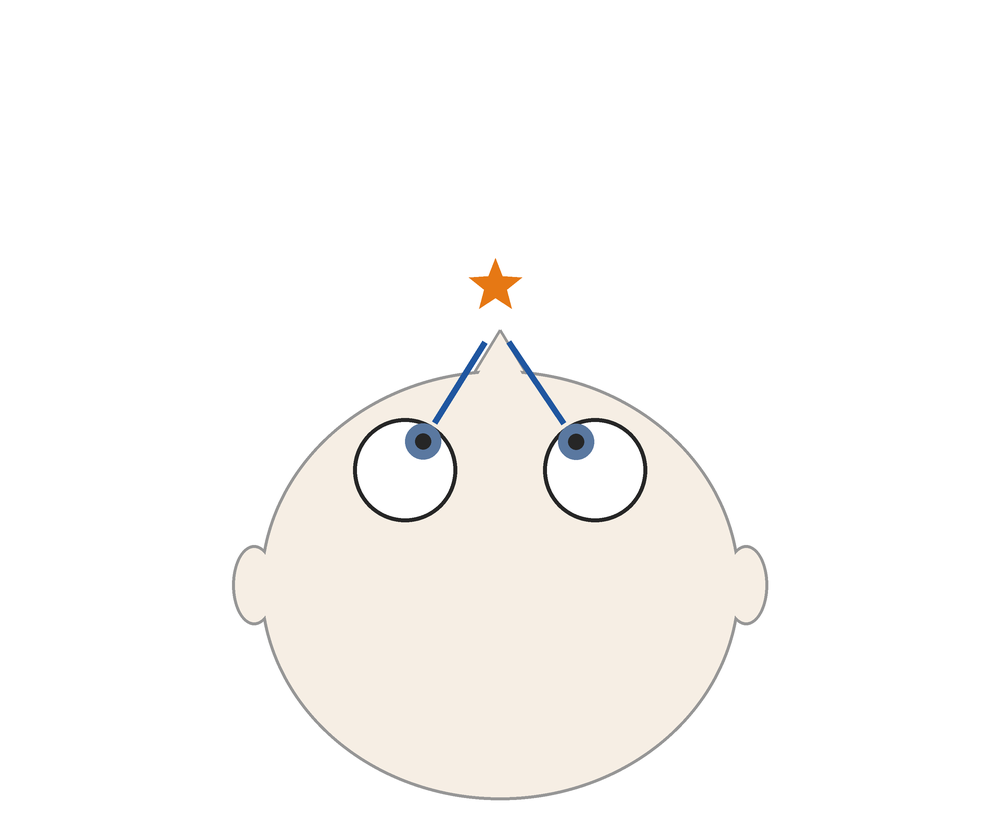
With fusional convergence added, the two lines of sight come together on the target.
Accommodative convergence is not exactly the same from moment to moment, even in the same person. Fusional convergence makes up the difference. It also holds back an exophoria, an outward drift that appears only when the two eyes stop working together.
The near reflex
When you look at something close, three things happen together: the eyes converge, the lens accommodates, and the pupils constrict. This is the near reflex, or near triad. You cannot separate the three on purpose.
In everyday viewing with both eyes, they are thought to start in this order:
- As the target comes closer, its image blurs and moves off the fovea of each eye.
- The shift between the two eyes drives convergence first.
- The blur then drives accommodation, and the pupils constrict along with it.
The pupil response comes last.
Convergence insufficiency
In convergence insufficiency, the eyes cannot converge enough or keep it up at near. It typically affects people who do a lot of near work, such as students, and it can cause eye strain.
The near point of convergence, the nearest point at which both eyes can stay fixed on a target, is farther away than normal (normally it is nearer than 10 cm), and fusional convergence at near is weak. Intermittent exotropia that is larger at near is called the convergence insufficiency type.
Treatment starts with orthoptic exercises: training to keep a near target single, which brings the near point closer and builds up fusional convergence. If symptoms remain, base-in prisms reduce how much the eyes need to converge.
Summary
- Convergence has four types: tonic, accommodative, proximal and fusional.
- Without tonic convergence, as in deep anesthesia or after death, the eyes drift outward.
- In the near reflex, convergence is thought to start first, then accommodation and pupil constriction.
- Convergence insufficiency can cause eye strain at near and is treated first with exercises.
Which retinal layer makes which wave, the three abnormal patterns, and the dark-adaptation trap to check before you report “negative” — on one page, by email. One email when I publish something new, about once a month. Unsubscribe anytime.